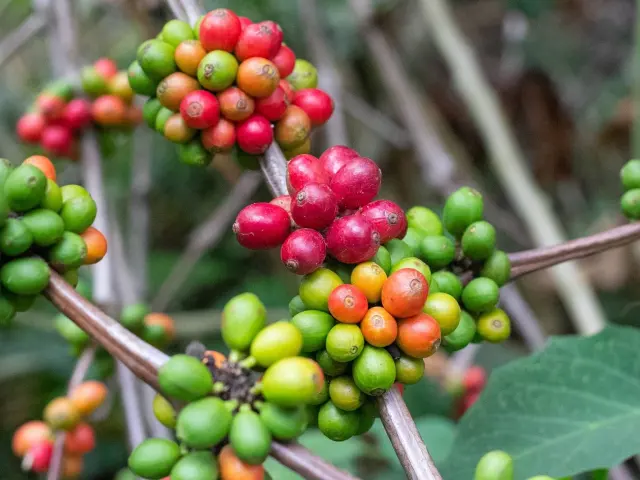
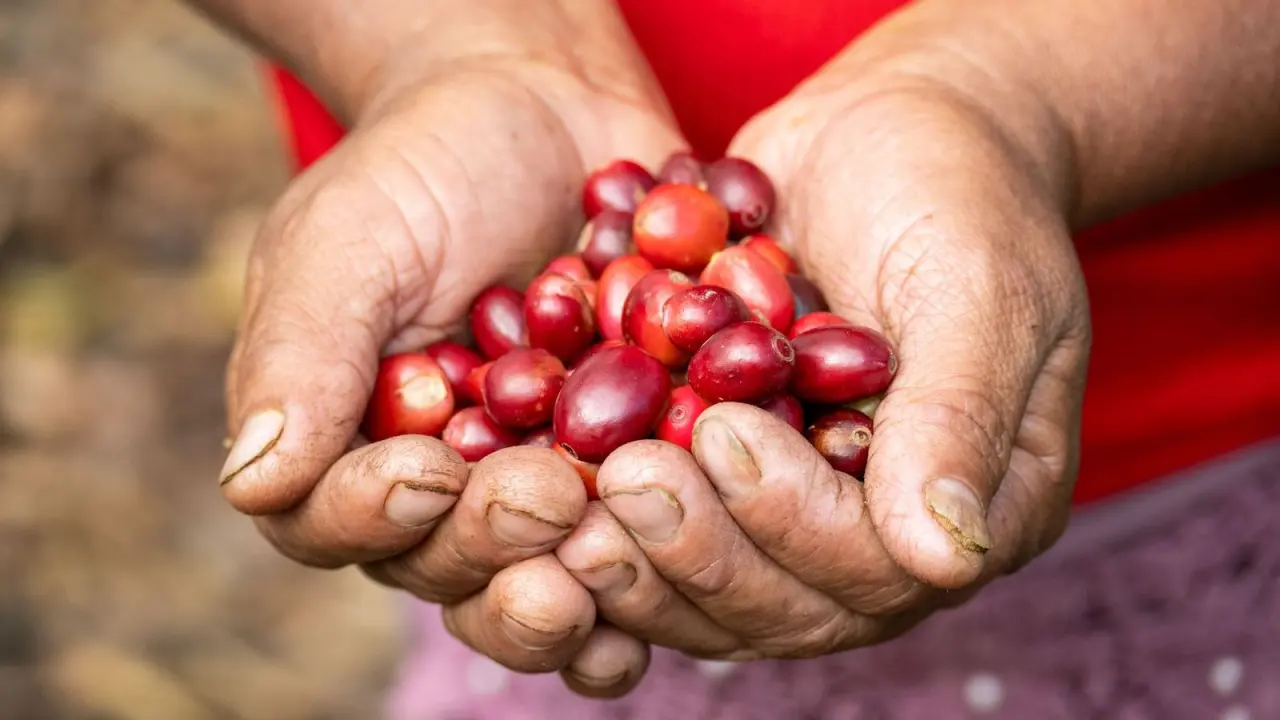
You may be wondering who Haitian coffee farmers really are. The short answer: smallholder families, more than 200,000 of them, roughly 10 percent of the population, according to a 2017 FAO case study.
For the bigger picture, read the hub guide on coffee in haiti, which this page supports.
| Item | Value |
|---|---|
| Families relying on coffee income (FAO, June 2017) | More than 200,000 families, roughly 10 percent of the population |
| Farmers with coffee as main income (World Bank, 2010) | More than 100,000 farmers |
| Coffee area in 1950 | 150 000 ha |
| Coffee area in 2004 | Less than 100 000 ha |
| Coffee export value, peak in the 1980s | US$90 million |
| Coffee export value in 2013 | US$1.8 million |
These figures come from the FAO’s June 2017 coffee value chain case study and the World Bank’s 2010 coffee supply chain risk assessment. Figures can change, so check the source before you rely on them.
Who are the Haitian coffee farmers?
Coffee in Haiti is mostly a story of small family plots. The FAO’s June 2017 case study says coffee remains a significant source of income for more than 200,000 Haitian families, or roughly 10 percent of the overall population.
A World Bank assessment from 2010 frames it more narrowly: coffee is the main source of income for more than 100,000 farmers. The two sources do not reconcile these numbers, so treat them as a rough range rather than an exact headcount.
Coffee sits inside a farm economy that is thinly financed. Per the FAO’s June 2017 case study, agriculture accounts for 25 percent of GDP and 51 percent of employment in Haiti. Yet the transportation and agriculture sectors combined account for less than one percent of total bank credit, as the same case study notes.
Coffee also matters beyond income. As of the World Bank’s 2010 report, the coffee ecosystem sustained a large part of the remaining tree cover, which stood at less than 1.5 percent of the country’s land.
How the coffee area shrank
The FAO case study gives a rough timeline of land under coffee:
- 1950: about 150 000 ha.
- 2004: less than 100 000 ha.
- 2006 to 2013: stable around 80 000 ha according to FAOSTAT, then up to 120 000 ha.
- 2014: a collapse back to 70 000 ha.
- As of the June 2017 case study: about 80 000 ha, according to information from the Haïti prend racine project.
The jumps in the FAOSTAT series are large, so read them as signs of uncertain data as much as real change. The overall direction, from far more land in 1950 to far less later, is clear in the source.
For the colonial roots of the crop, see the history of saint-domingue coffee plantations.
Why did farmers move away from coffee?
The FAO case study draws on the World Bank’s 2010 work and lists several overlapping causes of the fall in production. According to the June 2017 document, these include:
- deforestation;
- replacement of coffee by more profitable staple crops, such as beans and cabbage;
- aging trees and aging farmers;
- diseases;
- a lack of investment.
Shocks made things harder. The case study says the earthquake in 2010 and Hurricane Mathew in 2016 worsened living conditions. It estimates the hurricane’s damage at US$1.9 billion, or 22 percent of GDP, with losses in agriculture, fisheries and livestock put at US$600 million.
Structural constraints on coffee growers
The World Bank’s 2010 assessment says the sector is held back by significant systemic problems. It names eight major constraints:
- the structure of the coffee creole garden, which contributes to low on-farm productivity;
- a land tenure system that inhibits long-term investment;
- poor transportation and logistics infrastructure;
- limited access to credit and high interest rates;
- aging coffee trees and farmers;
- waning government interest and support for the sub-sector;
- lack of industry-level coordination;
- a lack of international and domestic promotion of Haitian coffee.
Many of these problems sit outside the farm gate. A grower can tend trees well and still face weak roads, expensive credit and insecure land rights.
Income and exports
The export record shows how far the sector has fallen. The FAO case study, citing FAOSTAT, says the value of coffee exports fell from a peak of US$90 million in the 1980s to US$1.8 million in 2013.
The same study concludes that local production is widely under-exploited. It sees room to expand volume, cultivated area and quality. The trade side is covered in more detail in the guide to haiti coffee exports.
What revival projects aim to do
The FAO case study looks at a project called Haïti prend racine, which aims at reversing this trend to protect the environment, including against soil erosion, and to improve farmers’ economic situation. It says the value chain needs rehabilitation and planting of coffee, open markets and fewer barriers to entry.
Its upgrading scenario estimates that the project could sequester up to 6 tCO2-e per ha per year and create about 13,160 jobs. These are ex-ante estimates from a draft preliminary assessment, not measured results, so they show intent more than outcomes.
Frequently asked questions
How many Haitian coffee farmers are there?
Show answer
No single count exists in these sources. The FAO’s June 2017 case study cites more than 200,000 families, while the World Bank’s 2010 assessment cites more than 100,000 farmers.
Why did the coffee area fall?
Show answer
The sources point to deforestation, a shift to staple crops, aging trees and farmers, disease and a lack of investment. The FAO case study puts the area at 150 000 ha in 1950 and less than 100 000 ha in 2004.
How much have coffee exports fallen?
Show answer
According to the FAO case study, export value dropped from a peak of US$90 million in the 1980s to US$1.8 million in 2013.
Do the revival projections show results already?
Show answer
No. The figures for jobs and carbon are ex-ante estimates in a preliminary 2017 draft, and they should not be read as measured outcomes.