
Wondering what Haitian food and drink looks like at the table? You’ll find a Creole blend: bold, spicy plates built on epis, fried pork and pikliz, plus porridges, hot drinks and coffee.
| Item | Value |
|---|---|
| Soup joumou added to UNESCO’s Intangible Cultural Heritage list | 2021 |
| Griot marinating time | At least 4 hours (preferably overnight) |
| Griot simmering time | 60-90 minutes |
| Griot frying oil temperature | 350°F (175°C) |
| Pikliz flavor at its best | 7 days in the refrigerator |
| Pikliz storage | Best used within 1-2 months, refrigerated |
These figures come from the Louisville Free Public Library’s Cuisine of Haiti recipe sheet and Chef’s Pencil’s list of Haitian dishes. Recipes and listings can change, so check the source before you rely on them.
What counts as Haitian food and drink?
Haitian cuisine is a Creole cuisine that blends African, French, Indigenous, Spanish and Levantine influences, according to Wikipedia’s article on Haitian cuisine. The same article describes the flavors as bold and spicy.
Everyday home cooking is called manje Kreyòl, meaning Haitian food, and Wikibooks says it leans on herbs and a liberal use of peppers. Heat is moderate: the same page says Haitian cuisine tends to be moderately spicy, not mild and not too hot, so expect warmth rather than extremes.
Africans introduced okra, ackee, taro and pigeon peas, along with various spices, to the island’s diet. By the 1700s the French were cultivating sugarcane, coffee, cotton and cocoa on plantations worked by enslaved Africans, as Wikipedia records.
Coffee sits on that list of colonial crops, which is why a guide to food and drink belongs next to our hub on haitian coffee and our look at coffee in haiti.
French influence stayed after independence: French cheeses, breads and desserts are still common in local stores and markets. Immigrants from Lebanon and Syria brought kibbeh, which Wikibooks says has been adopted into Haitian cuisine.
The flavor base: epis and pikliz
The flavor base of much Haitian cooking is epis, a combination sauce made from cooked peppers, garlic and herbs, particularly green onions, thyme and parsley, according to Wikibooks. It is used as a basic condiment for rice and beans and in stews and soups.
Chef Alain Lemaire, interviewed by Cuisine Noir in December 2024, calls epis the quintessential element of Haitian cuisine.
The Louisville Free Public Library’s recipe sheet blends a home version into a smooth paste from these ingredients:
- Green bell pepper and onion
- Garlic and green onions
- Parsley and thyme
- Olive oil
- Vinegar or lime juice
Pikliz is the spicy slaw that sits beside almost everything fried. Wikibooks lists cabbage, carrot, vinegar, scotch bonnet pepper and spices, and the library’s recipe sheet says the flavor builds in the refrigerator:
- 24 hours: good flavor
- 2-3 days: better flavor
- 7 days: best flavor
Keep it refrigerated and use it within 1-2 months, advises the library’s recipe sheet, with a clean utensil each time you serve it.Chef’s Pencil explains the appeal: the acidity of pikliz balances the rich fattiness of fried foods such as griot and fried chicken.

Everyday plates: rice, pork, stews and fritay
A typical plate is diri kole ak pwa, rice and beans, which Wikibooks describes as brown rice with red kidney or pinto beans, glazed with a marinade and topped with red snapper, tomatoes and onions.
If you are new to the cuisine, chefs Nadege Fleurimond and Alain Lemaire suggest starting with griyo (fried pork), akra (malanga fritters) and diri kole, as Cuisine Noir reported.
Griot is pork shoulder marinated in citrus, braised and then fried, says Wikipedia’s griot entry. It adds that some consider griot, together with red beans and rice, to be Haiti’s national dish.
The library’s recipe sheet turns that into three steps:
- Marinate the pork in epis and seasonings for several hours, preferably overnight.
- Simmer it in a heavy pot until the pork is tender and most of the liquid has evaporated.
- Fry it in batches in hot oil until deep golden brown and crispy.
Griot is almost always served with pikliz as well as rice or bannann peze, says Wikipedia. Fried foods are collectively known as fritay and are sold widely on the streets, per Wikibooks, and Chef’s Pencil calls them the favorite meal of Haitians in a hurry.
Other plates worth knowing:
- Diri djon djon: rice in black mushroom sauce. The library’s sheet has you boil dried djon djon mushrooms and strain the broth to remove grit.
- Legim: a thick vegetable stew of eggplant, cabbage, chayote, spinach, watercress and other vegetables, depending on availability and the cook’s preference.
- Tchaka: a hearty stew of hominy, beans, joumou (pumpkin) and meat, often pork. Chef’s Pencil says it takes a day to prepare.
- Pate kòde: patties with fillings such as hot dogs and eggs, smoked herring and eggs, or chicken and cabbage.
- Akra: crispy, spicy fried malanga fritters.
Fried green plantains, bannann peze, are fried twice for a crisp finish, the library’s sheet explains. Ripe plantains fried until caramelized are a different dish, bannann mi fri.

Breakfast: porridge, bread and spaghetti
Breakfast can surprise you: Wikibooks says spaghetti is most often served in Haiti as a breakfast dish. It is cooked with hot dog, dried herring and spices, and served with ketchup and sometimes raw watercress.
Kasav is a bread made from manioc, usually eaten for breakfast, as a snack or in the evening with butter, mamba, jam or avocado, according to Chef’s Pencil.
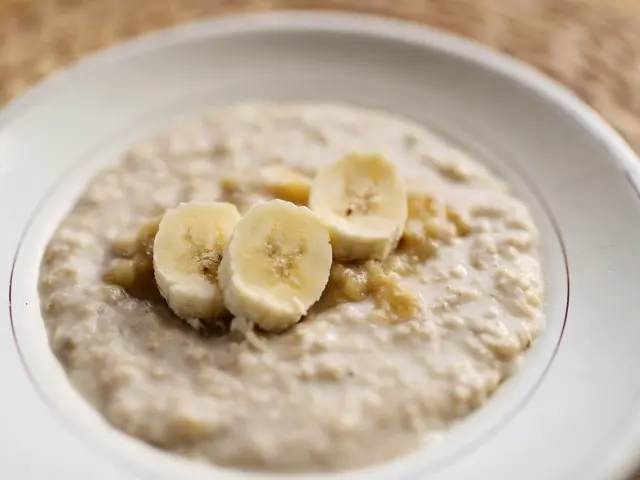
Akasan is a drink of cornmeal or milled corn kernels, milk and aromatic spices such as cinnamon, usually served hot or warm at breakfast with bread, per Chef’s Pencil. Wikibooks describes it as a thick corn milkshake with a consistency similar to labouyi, a popular corn porridge.
You can cook the porridge at home with our haitian labouyi recipe. Our guide to haitian breakfast foods covers the rest of the morning table.
The question of what to pour beside that bread is the subject of our haitian coffee and bread pairing guide.
Haitian drinks: from akasan to kremas and coffee
Wikipedia’s article on Haitian cuisine gives drinks their own section, with entries for beer, rum, clairin, crémas and non-alcoholic drinks. Our guide to haitian drinks is the place to browse the wider range.
Three drinks show the spread from morning to celebration:
- Akasan: the warm corn drink above, a breakfast staple and a source of income for the many vendors who sell it, per Chef’s Pencil.
- Kremas: an emblematic alcoholic drink served on special occasions, made from coconut milk, unsweetened and sweetened condensed milk, spices and rum. Chef’s Pencil calls it a must-have at Christmas and warns that it is stronger than it tastes.
- Chocolat des Cayes: listed by Wikibooks as homemade cocoa.
For a cup of your own cocoa, see our haitian hot chocolate recipe.
For the cup of coffee itself, start with our haitian coffee recipe for the basic method. Our haitian spiced coffee guide takes a warmer route, and readers who prefer the Creole term can follow the kafe ayisyen guide.

Celebration dishes and sweets
Soup joumou is made with squash purée, beef, potatoes and vegetables and is traditionally served on New Year’s Day, according to Chef’s Pencil. It says the soup was once the exclusive delicacy of the white masters, while the enslaved people who prepared it were forbidden to eat it.
Chef’s Pencil adds that joumou became a symbol of freedom after Jean-Jacques Dessalines declared independence in 1804, and that it was added to UNESCO’s Intangible Cultural Heritage list in 2021.
Cuisine Noir noted in December 2024 that the year marked Haiti’s 220th independence celebration. Fleurimond described Haitian food culture there as “an expression of identity, resilience, and community.”
Potato and beet salad, a local take on Russian salad, almost always finds its way onto the table at Haitian events, says Chef’s Pencil. It appears in every Haitian home during the holidays and on Sundays.
On the sweet side, the sources describe three treats:
- Pen patat: a soft sweetbread made with cinnamon, evaporated milk and sweet potato, usually served cold from the refrigerator but fine at room temperature.
- Fresco: similar to an Italian ice but made primarily of fruit syrup, and frequently sold by street vendors, per Wikibooks.
- Dous makòs: a vanilla fudge from Petit-Goave with three stripes (vanilla, chocolate and a red layer), created in 1939 by Fernand Macos, says Chef’s Pencil.
Whatever you cook first, season well and serve something sharp alongside: epis in the pot, pikliz on the side.
Frequently asked questions
What is the national dish of Haiti?
Show answer
Wikipedia’s griot entry says some consider griot, together with diri ak pwa wouj (red beans and rice), to be Haiti’s national dish. That is a view held by some, not an official designation.
What is epis?
Show answer
Epis is a blend of herbs, peppers and garlic that forms the flavor base of much Haitian cooking. Wikibooks lists green onions, thyme and parsley as its main herbs.
How long does pikliz keep?
Show answer
The Louisville Free Public Library’s recipe sheet says to keep pikliz refrigerated and use it within 1-2 months, taking it out with a clean utensil each time.
What do Haitians eat for breakfast?
Show answer
The sources mention spaghetti with hot dog and dried herring, kasav bread with butter or avocado, and akasan, a warm corn drink served with bread.
What is kremas?
Show answer
Kremas is an alcoholic Haitian drink of coconut milk, unsweetened and sweetened condensed milk, spices and rum. Chef’s Pencil says it is served on special occasions and is a Christmas favorite.