
Wondering about haitian coffee vs colombian coffee? Haitian beans are rare, small-lot and mostly old Typica, with mild, smooth, chocolatey cups. The sources here don’t cover Colombia, so check any Colombian bag’s label against the points below.
The wider background sits in the guide to haitian coffee.
| Haitian coffee fact | Value |
|---|---|
| Main variety | Typica, on old trees |
| Harvest window | September to June |
| Typical output for many farmers | 5kg to 10kg of cherries per year |
| Highest peak | 2,680 meters above sea level (Pic la Selle) |
| Coffee Review score of one Haitian Blue lot | 92 points |
These figures come from Perfect Daily Grind and Barista Magazine. They can change, so check the sources before you rely on them.
What sets Haitian coffee apart
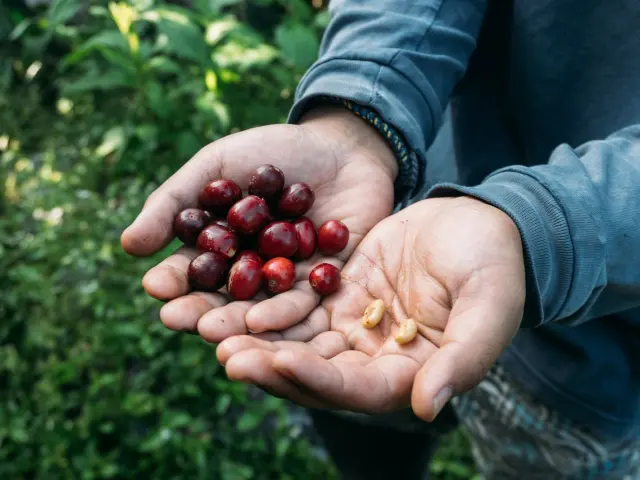
Most Haitian coffee comes from small farmers rather than big estates. A Singing Rooster director quoted by Perfect Daily Grind describes creole gardens, where you find a few coffee plants beside bananas, cassava, papaya, other vegetables and fruits. He adds that many Haitian farmers will only produce around 5kg to 10kg of cherries per year.
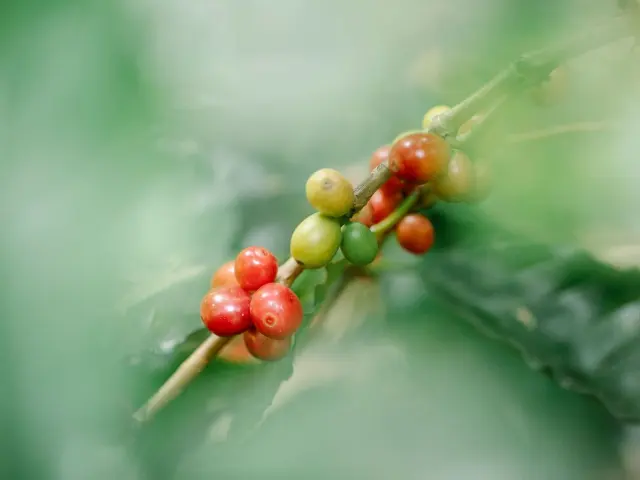
Many of the plants are Typica, and they are old, tall and rarely pruned, so they carry few cherries. The same guide lists Caturra, Catimor and Mundo Novo as other varieties.
A study published in 2025 in Plants, People, Planet found at least five Coffea arabica varietal groups in Haiti, versus two in Guadeloupe, according to its FAO AGRIS record. So the island’s coffee is less uniform than its “old Typica” reputation suggests.
The majority of production is organic, but Perfect Daily Grind says this is largely not by choice, because most farmers can’t afford fertilisers or costly inputs. That is a different thing from a certified organic label.
How does Haitian coffee taste?
A US roaster’s profile describes a mild, smooth body with notes of chocolate or pure cocoa. It adds hints of citrus or dried raisin, and a relatively low acidity because most Haitian coffees are washed.
A writer at Barista Magazine tasted a Haitian Blue lot, a name trademarked by Café Kreyol, and found it smooth and mellow with a pronounced acidity. Common notes there were a silky, buttery body and noticeably nutty flavors. The two accounts differ on acidity, so treat it as something that varies by lot.
Quality can be high. Fresh Cup reports that a Coffee Review blind review awarded beans from the Thiotte region a score of 90.
Growing conditions and harvest
Haiti’s highest point, Pic la Selle, reaches 2,680 meters above sea level, which Barista Magazine calls just high enough for specialty coffee. The mountains also bring ample rainfall, which can raise the risk of coffee leaf rust.
The harvest generally begins in September and can sometimes last until June, according to Perfect Daily Grind. Farmers pick by hand, and the cherry goes to wet mills.
Processing differs by purpose:
- Washed: most of the country’s coffee, helped by a programme in the 1990s that built washing stations for many co-ops.
- Natural: farmers usually choose it for their own consumption.
- Honey: introduced by Singing Rooster partly because washed processing strains scarce water.
Where does Colombian coffee fit in the comparison?
The source material gathered for this guide covers Haiti, not Colombia. No Colombian figures are stated here, because they would be guesses.
You can still make a fair comparison with a Colombian bag in your hand. Use the same checklist the Haitian facts above suggest:
- The variety named on the bag, set against Typica, Caturra or Catimor.
- The growing altitude the roaster states.
- The processing method: washed, natural or honey.
- The harvest date or crop year.
- Tasting notes, compared with chocolate, nut and mild acidity.
How to compare two bags in practice
- Pick one roast level for both bags, so roast doesn’t hide origin differences.
- Brew them the same way, with the same dose and water.
- Taste side by side and note body, acidity and sweetness separately.
- Read the label details from the checklist and match them to what you tasted.
Specialty Haitian coffee is not always on your local grocer’s shelf, as Barista Magazine notes. The guide on how to choose haitian coffee covers what to look for when you buy, and the answer to is haitian coffee good goes deeper on quality.
Frequently asked questions
Is Haitian coffee stronger than Colombian coffee?
Show answer
The sources here don’t measure strength for either origin. Haitian coffee is described as having a mild, smooth body, and strength in the cup depends mostly on how you brew it.
Is Haitian coffee organic?
Show answer
Most production is organic, but Perfect Daily Grind says this is largely because farmers can’t afford fertilisers. Check the bag for a certification if that matters to you.
What variety is most Haitian coffee?
Show answer
Many plants are old Typica, an Arabica variety. Caturra, Catimor and Mundo Novo are also grown.
Why is Haitian coffee hard to find?
Show answer
Production is small: Perfect Daily Grind notes that small volumes are produced in the mountainous regions and many farmers harvest only a few kilograms. Specialty lots are mostly sold in small amounts through a handful of companies.